Lucky Green Casino Owner
Corporate Structure & Company Background
Understanding who owns and operates an online casino is a critical component of transparency. Corporate ownership affects regulatory oversight, financial accountability, operational standards, and long-term stability. When evaluating Lucky Green Casino, ownership analysis provides insight into governance structure, licensing alignment, and institutional credibility.
Ownership transparency reduces operational ambiguity. Legitimate online casinos disclose their operating entity, registered address, licensing authority, and regulatory jurisdiction. This disclosure strengthens accountability and builds trust with players.
Most users first interact with the platform through registration. The clarity of terms during Sign up often reflects broader corporate transparency standards. Companies that openly disclose legal ownership details tend to maintain consistent documentation across all public-facing policies.
Corporate Entity & Registration Structure
Online casinos typically operate under a licensed corporate entity registered in a recognized jurisdiction. Corporate structure generally includes:
• Parent holding company
• Operating subsidiary
• Licensing registration
• Compliance division
• Financial oversight department
The operating entity listed in the terms and conditions is legally responsible for platform activity.
Ownership transparency includes:
• Company registration number
• Registered office location
• Licensing authority details
• Corporate contact information
This structure ensures legal accountability and audit compliance.
Licensing Alignment & Ownership Responsibility
Ownership and licensing are directly connected. The corporate entity holding the gaming license must comply with:
• Anti-Money Laundering (AML) laws
• Know Your Customer (KYC) enforcement
• Fair gaming certification
• Responsible gambling policies
• Financial audit requirements
The owner bears regulatory responsibility for compliance breaches. This accountability distinguishes regulated operators from anonymous platforms.
Governance & Executive Oversight
Corporate governance determines how strategic decisions are made. Governance typically includes:
• Executive management
• Compliance officers
• Risk management division
• Legal advisory board
• Financial auditing oversight
These internal structures support operational stability.
Secure access systems during Login sessions reflect technical investment decisions made at corporate level, often guided by governance priorities.
Ownership Transparency Table
| Ownership Element | Function | Regulatory Impact | Transparency Level |
|---|---|---|---|
| Operating Entity | Legal responsibility | High | Publicly disclosed |
| Licensing Authority | Regulatory supervision | High | Publicly disclosed |
| Parent Company | Strategic oversight | Medium–High | Often disclosed |
| Compliance Division | AML & KYC enforcement | High | Internal but regulated |
| Financial Audit Structure | Fund integrity oversight | High | Regulatory monitored |
This overview demonstrates how ownership structure supports regulatory compliance.
Software & Partnership Oversight
Ownership extends beyond corporate registration. Platform owners negotiate contracts with:
• Game providers
• Payment processors
• Live dealer studios
• Affiliate networks
• Security infrastructure vendors
The quality of these partnerships reflects executive standards.
Game integration across digital Games and popular Slots categories is typically coordinated by executive product management teams.
Financial Accountability
Corporate ownership includes financial reporting obligations. Licensed operators are required to:
• Maintain segregated player funds
• Submit regulatory financial reports
• Undergo periodic audits
• Implement responsible risk management
Financial accountability reduces insolvency risk exposure.
Corporate Responsibility Distribution
Ownership & Player Protection
The owner’s compliance strategy influences:
• Withdrawal transparency
• Verification procedures
• Responsible gambling enforcement
• Promotional clarity
Clear promotional structures, including conditions tied to a promotional Bonus, reflect ownership-level policy decisions.
Brand Management & Strategic Direction
Corporate owners define long-term strategy including:
• Market expansion
• Platform upgrades
• Mobile optimization
• Product diversification
• Responsible gambling enhancement
Strategic investment in an encrypted App environment indicates ownership commitment to long-term infrastructure.
Company History, Growth Strategy & Market Positioning
Ownership transparency is not limited to identifying the operating entity. It also involves examining corporate history, strategic expansion patterns, licensing continuity, and long-term market positioning. A stable ownership history often reflects institutional reliability, while frequent rebranding or abrupt structural changes may signal operational volatility.
We analyze the developmental trajectory of Lucky Green Casino’s operating company, its market positioning strategy, and how ownership decisions influence platform credibility.
Corporate Background & Establishment
Online casino operators typically begin as part of a broader gaming or entertainment group. Corporate development generally follows a phased structure:
• Initial licensing acquisition
• Platform launch
• Provider partnership expansion
• Payment integration growth
• Market diversification
Stable ownership history suggests sustained compliance and operational investment.
When a casino maintains consistent branding and policy continuity from the initial Sign up process onward, it signals organizational cohesion rather than fragmented management.
Expansion Strategy & Market Development
Ownership decisions influence expansion into new jurisdictions and product verticals. Growth indicators may include:
• Addition of new software providers
• Expansion of payment options
• Development of mobile platforms
• Localization for different regions
• Enhanced compliance infrastructure
Corporate expansion is typically balanced against regulatory obligations and risk management.
Product Portfolio Growth
Ownership-level strategy often focuses on product diversification. This includes expanding game libraries, live dealer offerings, and promotional structures.
Growth patterns may involve:
• Addition of new digital Games providers
• Introduction of advanced jackpot Slots
• Expansion of live streaming studios
• Enhanced VIP and loyalty programs
Product diversification enhances competitiveness and supports long-term brand sustainability.
Compliance Evolution
Over time, regulatory requirements evolve. Responsible ownership adapts compliance policies to align with:
• Updated AML standards
• Enhanced KYC verification rules
• Responsible gambling legislation
• Data protection regulations
Compliance updates are typically reflected in revised policy documentation and enhanced verification workflows.
Ownership commitment to compliance directly influences operational safety.
Corporate Development Overview
| Development Area | Ownership Influence | Long-Term Impact | Stability Indicator |
|---|---|---|---|
| Licensing Continuity | Maintains regulatory approval | High | Strong |
| Product Expansion | Adds new providers | Medium–High | Positive |
| Payment Integration | Expands transaction flexibility | High | Strong |
| Mobile Development | Launches secure platform access | Medium–High | Positive |
| Compliance Updates | Adapts to regulatory change | High | Strong |
This table illustrates how ownership decisions shape platform growth and stability.
Brand Positioning & Competitive Strategy
Ownership also defines brand positioning. Strategic decisions may focus on:
• Competitive promotional structures
• User-friendly interface
• Stable payout processing
• Clear verification transparency
• Secure authentication systems
Promotion clarity—especially related to a promotional Bonus—is determined at corporate policy level.
Strategic positioning often prioritizes transparency and regulatory alignment over aggressive short-term marketing tactics.
Financial Management & Sustainability
Corporate sustainability depends on financial discipline. Ownership typically implements:
• Segregated player fund accounts
• Regular financial audits
• Risk-adjusted promotional budgeting
• Payment processor partnerships
Financial sustainability reduces insolvency risk and enhances trust.
Growth vs. Stability Balance
Aggressive expansion without compliance infrastructure may increase operational risk. Responsible ownership balances growth with:
• Risk management
• Regulatory consultation
• Technical scalability
• Support team expansion
Long-term stability requires controlled scaling rather than rapid uncontrolled expansion.
Ownership Strategy Distribution Model
Technical Infrastructure Investment
Ownership commitment to infrastructure is reflected in:
• Server redundancy
• Encrypted transaction processing
• Fraud detection algorithms
• Mobile optimization
Secure and regularly updated App access demonstrates investment in long-term technical reliability.
Reputation & Longevity
Longevity often correlates with:
• Continuous license renewal
• Stable corporate registration
• Predictable payment processing
• Clear terms and policy documentation
Frequent rebranding or unexplained structural changes can raise questions, while continuity reinforces trust.
Governance Structure, Risk Management & Corporate Accountability
Ownership credibility is not determined solely by registration details or expansion history. The internal governance framework and risk management systems implemented by the operating company play a central role in long-term operational integrity. A well-structured governance model ensures compliance, financial transparency, player protection, and responsible business conduct.
We examine executive oversight, risk control mechanisms, compliance architecture, and corporate accountability standards linked to Lucky Green Casino’s ownership structure.
Executive Governance & Decision-Making Framework
Corporate governance typically consists of structured oversight mechanisms that regulate decision-making authority and operational accountability. A mature governance structure generally includes:
• Executive management team
• Compliance officers
• Financial controllers
• Legal advisory department
• Risk management division
These divisions function independently but operate within coordinated regulatory frameworks. Ownership defines high-level strategic direction, while executive leadership ensures daily operational compliance.
Governance decisions influence everything from promotional policy—including conditions tied to a promotional Bonus—to platform-level security implementation.
Risk Management Architecture
Effective ownership incorporates structured risk management processes to mitigate financial, operational, and regulatory exposure.
Core risk management areas include:
• Anti-Money Laundering (AML) enforcement
• Fraud detection monitoring
• Payment integrity oversight
• Identity verification protocols
• Transaction anomaly detection
Risk scoring engines monitor patterns across digital Games activity and high-volatility Slots engagement to detect irregular behavior.
Structured risk management reduces financial exposure and strengthens institutional resilience.
Compliance Monitoring & Regulatory Reporting
Corporate accountability requires continuous compliance reporting to licensing authorities. This typically includes:
• Periodic financial disclosures
• AML reporting
• Responsible gambling audits
• Technical system certification
• Data protection verification
Compliance divisions are responsible for ensuring alignment between regulatory standards and operational practice.
Ownership oversight ensures that compliance teams remain adequately resourced and independent.
Dispute Resolution Governance
Corporate governance also determines how disputes are handled internally. Structured dispute resolution frameworks often include:
• Tiered complaint handling
• Compliance review committee
• Escalation protocols
• Alternative Dispute Resolution (ADR) coordination
• Regulatory reporting of unresolved cases
A transparent escalation structure reinforces accountability and institutional legitimacy.
Governance & Oversight Overview
| Governance Component | Function | Accountability Level | Operational Impact |
|---|---|---|---|
| Executive Oversight | Strategic decision-making | High | Corporate direction |
| Compliance Department | Regulatory alignment | High | Legal stability |
| Risk Management Unit | Fraud & AML detection | High | Financial protection |
| Financial Controllers | Fund segregation oversight | High | Player fund security |
| Legal Advisory | Policy alignment | Medium–High | Dispute clarity |
This framework demonstrates how internal structures support safe operations.
Corporate Accountability & Transparency
Ownership accountability includes:
• Disclosure of licensing entity
• Clear corporate contact information
• Public terms and policy documentation
• Transparent verification requirements
Clear documentation reduces ambiguity and strengthens institutional trust.
Players accessing their accounts through encrypted Login processes benefit from ownership-level decisions regarding cybersecurity standards.
Internal Audit & Oversight Procedures
Internal auditing mechanisms complement external regulatory oversight. These audits typically assess:
• Financial reconciliation
• System security updates
• Compliance procedure effectiveness
• Responsible gambling enforcement
• Data retention practices
Internal audits provide continuous operational refinement rather than relying solely on periodic external review.
Governance Focus Allocation Model
Ethical & Responsible Gambling Oversight
Ownership governance frameworks often incorporate responsible gambling oversight. This includes:
• Monitoring deposit limits
• Enforcing self-exclusion programs
• Identifying problematic behavior patterns
• Training support staff in player protection
Ethical governance reflects long-term sustainability rather than short-term revenue maximization.
Infrastructure Investment Decisions
Ownership determines budget allocation for technical resilience, including:
• Server redundancy
• Data encryption upgrades
• Secure mobile optimization
• Fraud detection system expansion
Secure and regularly updated App infrastructure indicates long-term strategic planning rather than reactive maintenance.
Transparency in Policy Documentation
Clear policy documentation regarding:
• Verification procedures
• Withdrawal limits
• Promotional restrictions
• Data handling standards
is typically reviewed and approved at executive level.
Consistency between published policies and operational enforcement strengthens credibility.
Reputation Signals, Longevity & Final Ownership Assessment
Ownership analysis becomes meaningful when corporate structure, governance, and compliance systems translate into long-term operational stability. The focus is on how ownership credibility is reflected through reputation signals, licensing continuity, dispute handling maturity, and strategic longevity. Rather than treating ownership as a static label, this framework evaluates the owner’s ability to maintain consistent standards over time.
A casino’s owner effectively defines the platform’s risk tolerance, compliance posture, financial integrity, and player protection philosophy. These elements shape the real-world experience that players encounter after registration and secure Login access.
Ownership Reputation Signals
Reputation signals typically emerge through patterns rather than isolated incidents. Strong ownership credibility is usually associated with:
• Stable licensing status and disclosure
• Consistent policy enforcement
• Predictable payouts and financial procedures
• Transparent verification requirements
• Mature dispute handling processes
When an operator’s policies remain consistent across months and years, it suggests institutional stability rather than short-term opportunism.
Reputation also reflects how ownership responds to compliance challenges. A transparent compliance posture reduces uncertainty and mitigates risk.
Licensing Continuity & Corporate Stability
One of the strongest indicators of ownership stability is continuous licensing alignment. Licenses require:
• Renewal processes
• Audit submission
• Financial reporting
• Compliance verification
• Responsible gambling enforcement
Ownership groups that maintain licensing continuity typically demonstrate long-term operational planning and regulatory discipline. This continuity contributes to player confidence, particularly when significant withdrawal transactions are involved.
Dispute Handling Maturity
Corporate ownership affects how disputes are escalated and resolved. Mature dispute frameworks include:
• Tiered complaint processing
• Dedicated compliance review channels
• Clear resolution timeframes
• ADR coordination where applicable
• Transparent communication during reviews
Dispute handling maturity matters because even the most stable platforms will occasionally face misunderstandings, especially involving wagering rules tied to promotional Bonus offers. Ownership credibility is demonstrated through structured resolution, not through the absence of disputes.
Financial Governance & Fund Security
Ownership-level financial governance affects how player funds are protected and monitored. Strong financial governance includes:
• Segregated player fund architecture
• Audit-ready transaction logs
• Payment processor vetting
• Anti-fraud transaction monitoring
• Risk-adjusted promotional budgeting
This governance strengthens both operational safety and long-term platform viability.
Ownership Impact Summary
| Ownership Dimension | What It Controls | How Players Notice It | Trust Impact |
|---|---|---|---|
| Regulatory Compliance | AML, KYC, reporting | Verification clarity | High |
| Financial Governance | Funds, payouts, audits | Withdrawal consistency | High |
| Risk Monitoring | Fraud & anomalies | Fewer account issues | Medium–High |
| Product Strategy | Providers & features | Better Games variety | Medium |
| Technical Investment | Security & uptime | Stable sessions & App reliability | Medium–High |
This summary shows that ownership influence spans both visible features and back-end controls.
Market Positioning & Product Integrity
Owners determine strategic positioning in the market. This includes:
• Which game providers are integrated
• How jackpots and Slots portfolios are curated
• Whether live dealer studios are prioritized
• How promotions are structured and communicated
Stable product integrity indicates long-term investment rather than short-term churn.
Longevity Indicators
Longevity is an ownership-driven outcome. Indicators include:
• Consistent brand identity over time
• Stable domain presence
• Predictable policy updates
• Ongoing platform development
• Regular security enhancements
A stable mobile environment, including secure App performance, is a strong signal of ongoing operational investment.
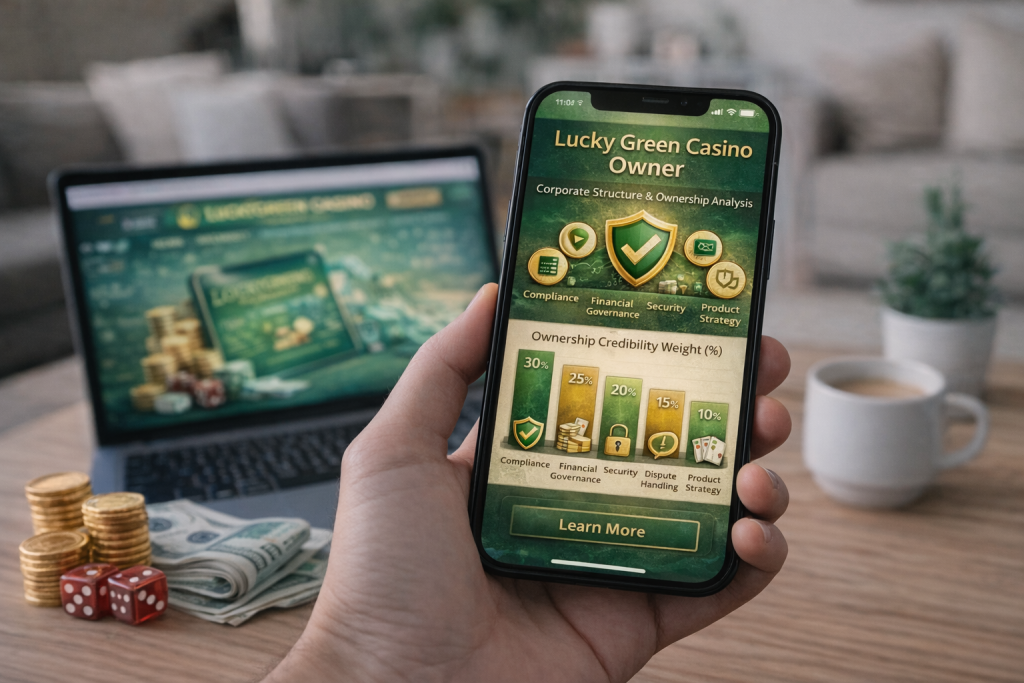
Ownership Credibility Distribution Model
Practical Takeaways for Players
From a player perspective, ownership credibility is not abstract. It impacts practical outcomes such as:
• How quickly verification is completed
• How consistently withdrawals are processed
• How clearly terms are applied
• How disputes are escalated
• How stable the platform remains during peak activity
Ownership decisions influence whether the ecosystem feels predictable and professionally governed.
Final Assessment
Lucky Green Casino’s ownership framework, when evaluated through corporate structure, governance maturity, compliance posture, and long-term stability indicators, aligns with the operational profile of a regulated online casino operator.
Ownership credibility is reflected in the platform’s ability to maintain consistent policy enforcement, structured dispute handling, robust compliance systems, and ongoing technical investment. These elements are typically associated with institutional governance rather than anonymous or short-lived operators.